


A Beginner’s Guide to the rules; or, Rules: the Basics. Here’s what you need to know to play Ascendancy LRP.
To take part in Ascendancy LRP you need 3 things besides your booking:
- A character to play
- A costume & Kit
- A rough idea of the rules
A character to play
Within the ‘rules’ section of the website, you will find the full rules and character generation system, which are all good to refer to. However, all you really need is a basic idea; it can be as simple as you like, starting from something like “I want to play a Frontiers tribal warrior”.
The more detail you add, the more interesting the character should be, however sometimes the simple characters work best (especially if you’re new to Ascendancy LRP). You can add details later once you get to know the system and background a bit better. We will offer you plenty of advice on this and also allow you to change and tweak your character in the first games you play, as we know how hard it can be get things right without a feel of how they work in play.
Tips: Playing a menacing, dark loner will result in being lonely and nobody interacting with you. The system is predominantly ‘player vs the environment’ (PvE), not ‘player vs player’ (PvP), so while there are no rules stopping you, the aim is to avoid PvP.
A costume & kit
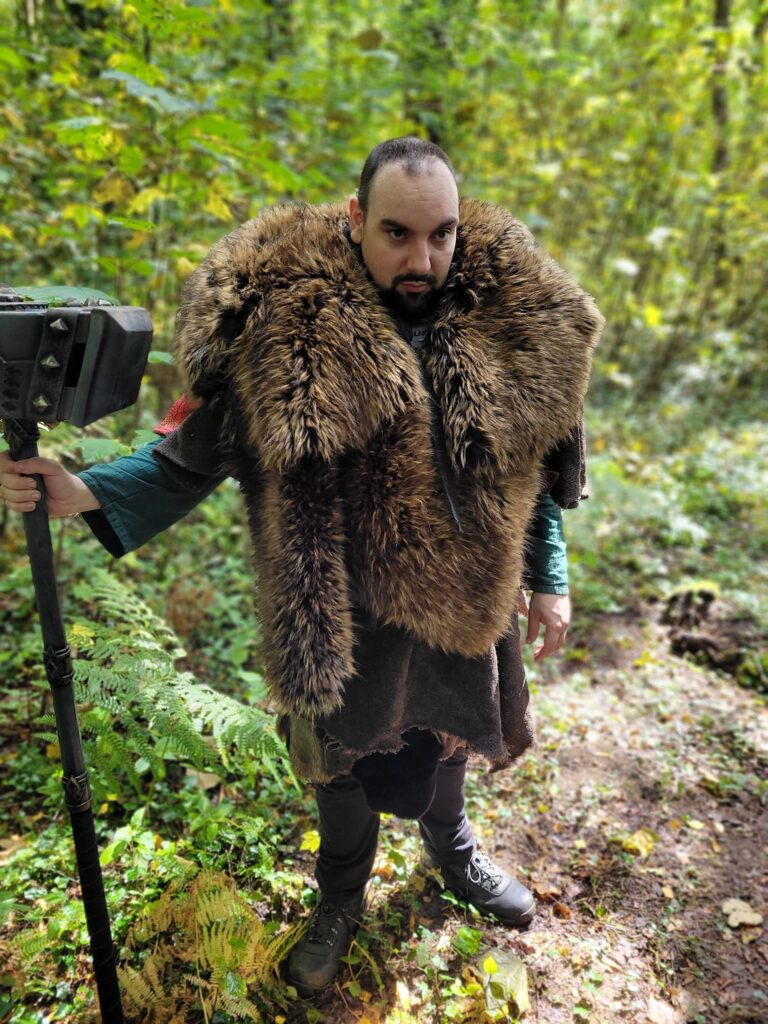
Put together a costume appropriate for the background of your character. There are pictures showing examples in the ‘game world’ section of the website, particularly on the more detailed pages about each Shard.
For your character you may also need props, or ‘phys-reps.’ Examples include healers needing bandages and perhaps some (blunt!) instruments to represent surgical equipment. Warriors will normally need a latex, LARP-safe weapon. Alchemists may have bottles for their potions. Seers/precogs will need cards, stones, runes, or something else to represent the roleplay of trying to see the future. Horologists will need a pocket watch.
A rough idea of the rules
What do we mean by a ‘rough idea’ of the rules? Well, it’s a tough question! Everyone has their own opinion, but here are several important things:
- Read the safety rules, and code of conduct.
- Know your character’s abilities. For instance, if you generate a character and give them the skill portal sense, read the rules so you understand that skill. Then, if a ref asks you how you intend to do something, you will be able to tell them what skill & talents you are using and to what level. Some people have poor memories so carry a print out of their character around with them as a reminder until they have got used to things.
- Know the 4 basic in-game calls: Time freeze, time in, time out and man-down
- Know the combat calls you will need. For instance, if you have taken the Weapons Master at level 4, you can call “Critical” when you strike with your weapon, doing an automatic critical hit to an unarmoured location.
- Know how many hits you can take before you need healing. Unless called otherwise, most hits do one point of damage.
You should never worry about the rules (or world background). If you’re confused, ask for help! Rules are your guide, they are not your master. The easiest way to learn any rules in any game is to play them; the same goes for Ascendancy LRP, and for Live Role Play in general.
Basic rules
Combat
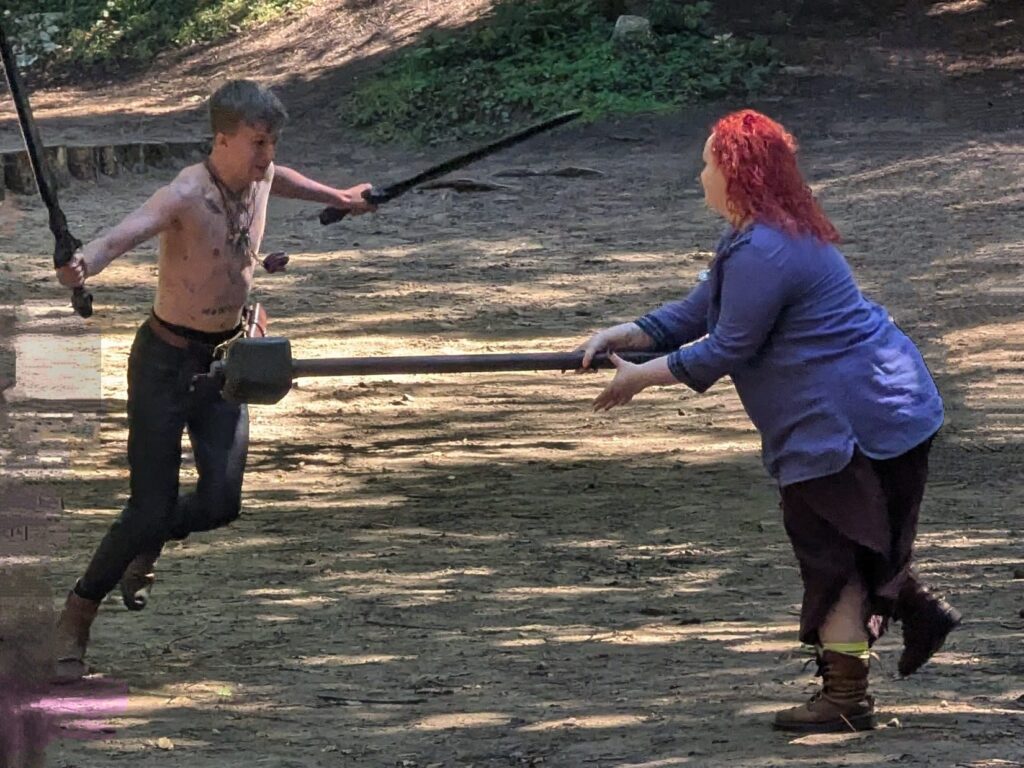
- Each basic character can take 1 hit point to each leg and each arm and 2 hit points to the torso.
- One hit from a weapon causes 1 hit point unless called otherwise.
- All characters can use melee and missile weapons, they don’t need a special skill.
- When a hit location is reduced to zero or less, it has received a critical hit and will no longer function. It must also be treated within 5 minutes by first aid or other means, or the character may die.
- If the Torso reaches 0 hit points, then that person falls unconscious.
- Head hits and groin hits don’t cause damage, since they should not be targeted in the first place for safety reasons.
- Armour absorbs damage, so 1 point of armour will stop 1 hit point of damage.
- Certain skills, talents and abilities increase the damage you can do with your weapons, or damage you absorb before you count the critical hit.
- Listen to the calls, they are self explanatory, i.e. if someone calls disarm while fighting you, drop your weapon since they have a skill that allows them to make this call. (Disarm does not stop you picking it up a few seconds later).
Healing
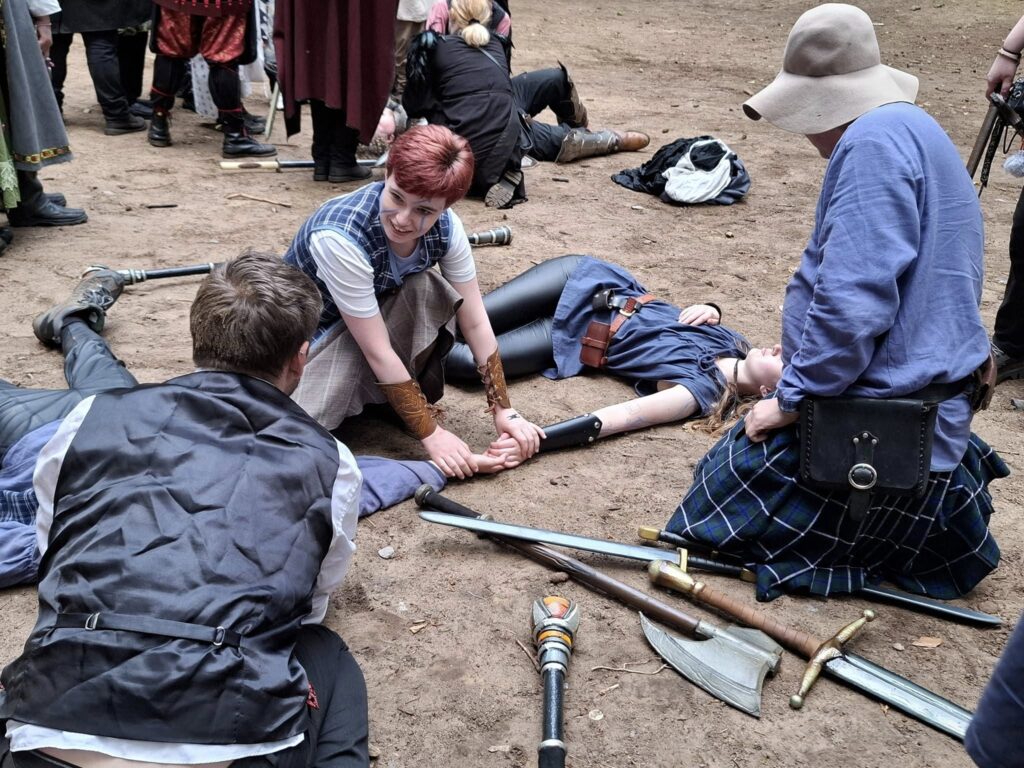
- First aid will generally keep a patient alive until surgery or some form of magical healing can be applied.
- Patients with minor wounds, i.e. down to zero but not below, can be treated by the correct level of first aid, magical healing, healing potions etc. and need not involve a ref, so long as they are treated in time.
- Patients with very severe wounds (-1 and below) may need a ref and a bead draw. Experienced healers or players can usually advise if you need a ref.
- Patients past their death count are not necessarily dead, but will need a ref and bead draw, as well as a healer or probably multiple healers.
Non-combat skills
For easy tasks you just do them. However, if you are trying to do something difficult you will need to find a ref, who will then say “yes, this is the result,” they may ask you to take a bead draw, they may tell you the results later, or may come and watch you while you perform the task, informing you what happens at each stage of the process.
HAP, or Heroic Action Points
- Each player starts with 6, and gains 1 point at end of each event they attend.
- HAP is gained by a player but spent on a character, so once spent on a character the HAP cannot be reallocated to another character and is not gained back when the character dies or retires.
- HAP is spent to perform difficult actions, or actions in stressful situation such as combat. Certain skills have a HAP cost against them this is the amount of HAP you must spend to perform this action.
- You get HAP back at a rate of 1 point per 30 minutes of rest, (rest is not using HAP for a full 30 minutes); 2 points for a meal; and you regain all your HAP during a full night’s sleep.
- Certain food and resources found in game will also give you HAP back.
Karma
- Karma is used to buy your new character their skills and talents (see the ‘character generation’ rules for starting characters’ Karma).
- Karma is also used to improve your character after each event.
- Unless stated otherwise, a player character gains 10 Karma per event, and a non-permanent crew member gains 5 Karma per event.
- Karma can be gained in other ways – such gains are awarded by the refs.
- Like HAP, while Karma is earned by a player it is spent on a character. Once spent on a character the Karma is lost. Starting characters may only have skills up to level 3 (see character creation rules). Talents, however, can start at level 5 should you wish.
Final note
There is lot of depth to the rules and system, and nobody will ever be penalised for not knowing the background, the rules, or how the world works! If you do not know or aren’t sure of something, ask a ref, we will be glad to help.